
We’re used to qualifying workouts and, indeed, exercises, as Resistance, Cardio or Aerobic. This broad categorization is fine when we need a quick way to choose the type of exercise we are going to do but really, once we get down to it and look at things in more detail the distinctions stop being so clear.
What works for a gym environment aimed at broadly funnelling its members into activities the general focus of which people can understand quickly, doesn’t work as well when it comes to your own personal fitness goals.
To understand this better let’s have a quick recap of definitions. Resistance training,[1] more frequently called strength training, is the use of external weights or the body’s own weight to cause muscular contractions that help improve physical strength.
“Cardiorespiratory endurance refers to the ability of the heart and lungs to deliver oxygen to working muscles during continuous physical activity”[2]. We usually (and popularly) associate cardio workouts with low-impact, aerobic workouts and frequently refer to them as “fat burning” which is scientifically true but doesn’t actually deliver the results one might expect from the description since fat stored in the body is such energy-rich source that we actually utilize a remarkably small amount of it to power what appear to be extensive energy needs.
Finally there is aerobics which is defined by the American College of Sports Medicine (ACSM) “as any activity that uses large muscle groups, can be maintained continuously and is rhythmic in nature.”[3]
This all appears perfectly reasonable until we actually consider how things work in the human body. Every type of exercise activates skeletal muscle which in turn allows us to use our body. And skeletal muscle will always experience some kind of resistance as the body moves against the pull of gravity which tries to keep us immobile. In order for muscles to work the body’s network of veins and capillaries needs to transfer oxygen to them via the bloodstream and take away the chemical byproducts produced by physical activity. So, every exercise then is also cardiovascular in nature.
In addition, irrespective of whether an exercise is short and intense and therefore anaerobic in nature or takes place over a long period of time which requires us to breathe evenly and deeply and enter into what we popularly call “the aerobic phase of exercise”, it will require the heart to pump blood to the lungs and the lungs to enrich it with oxygen so our circulatory system can deliver it to the muscles that are doing all the work.
Because there is no separate system, in the body, that becomes activated when we engage in some kind of resistance workout (like doing press ups) what really defines what kind of workout we do is the way we choose to execute an exercise. In other words what really determines what type of exercise we do is the ‘how’, not the ‘what’.
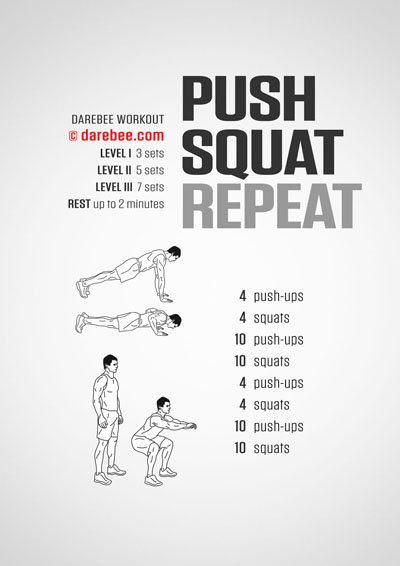
Executing Push-Ups and Squats Differently
To illustrate this better let’s take two exercises anyone can perform, anywhere without any special need for space or equipment and analyse how they can change, depending on how we choose to execute them.
Let’s start with push-ups. During a single push up we move up to sixty-four percent of the body’s weight[4]. This makes it a resistance exercise that is very similar to the bench press in the muscles activated.[5]
If we execute a push-up then the same way we would work on a bench press, i.e. paying attention to form, exhaling slowly and performing it at a steady pace, it is a strength-training exercise much like any other type of resistance work and, as the research shows, it could be substituted for a bench press.
Now, let’s add a cardiovascular component to this exercise. Let’s perform that single push-up we started off with, at the same steady, controlled rate as before, but this time let’s go for a maximum number of repetitions to failure.
What have we done now by performing it in a controlled state to failure? We’ve increased our heartbeat, made our lungs work harder and had to take deeper breaths as a result. Is this execution push-ups still a strengthening exercise? Yes, but it now has a strong cardiovascular component because we’re forcing our muscles to work really hard and this lads to adaptations that increase the number of capillaries the body will build to them which, in turn, increases the effectiveness of oxygen-rich blood supply that gets to them which then, increases the length of time we can perform this exercise before we reach the failure point.
Doing it this way then makes us stronger, certainly, but it also increases our endurance and it is the cardio component that now takes center stage even though we are still doing push-ups.
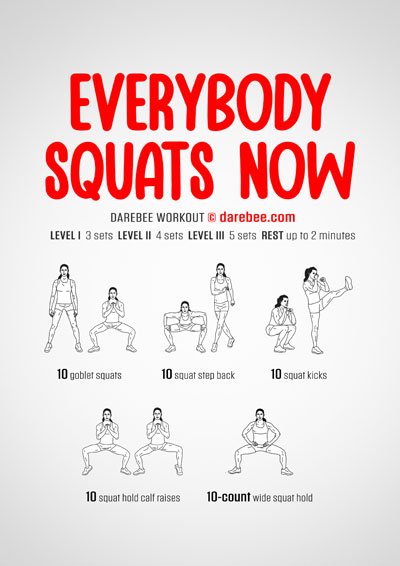
We would get the exact same results but in a different body part if we did squats instead. By focusing on the largest muscle group of the lower body we force it to work on strength (if we perform our squats slowly, in a controlled fashion) but we then begin to introduce the need for cardiovascular improvement if we continue to execute squats to failure.
Going Aerobic
Is aerobic training different to cardiovascular training? Technically no. Every time we raise our heartbeat we make our lungs work a little harder and that also improves our aerobic capacity. But, there can be a difference in the focus for adaptations that need to take place in our body, because of differences in the execution of an exercise.
Let’s go back to our example of push-ups and squats.
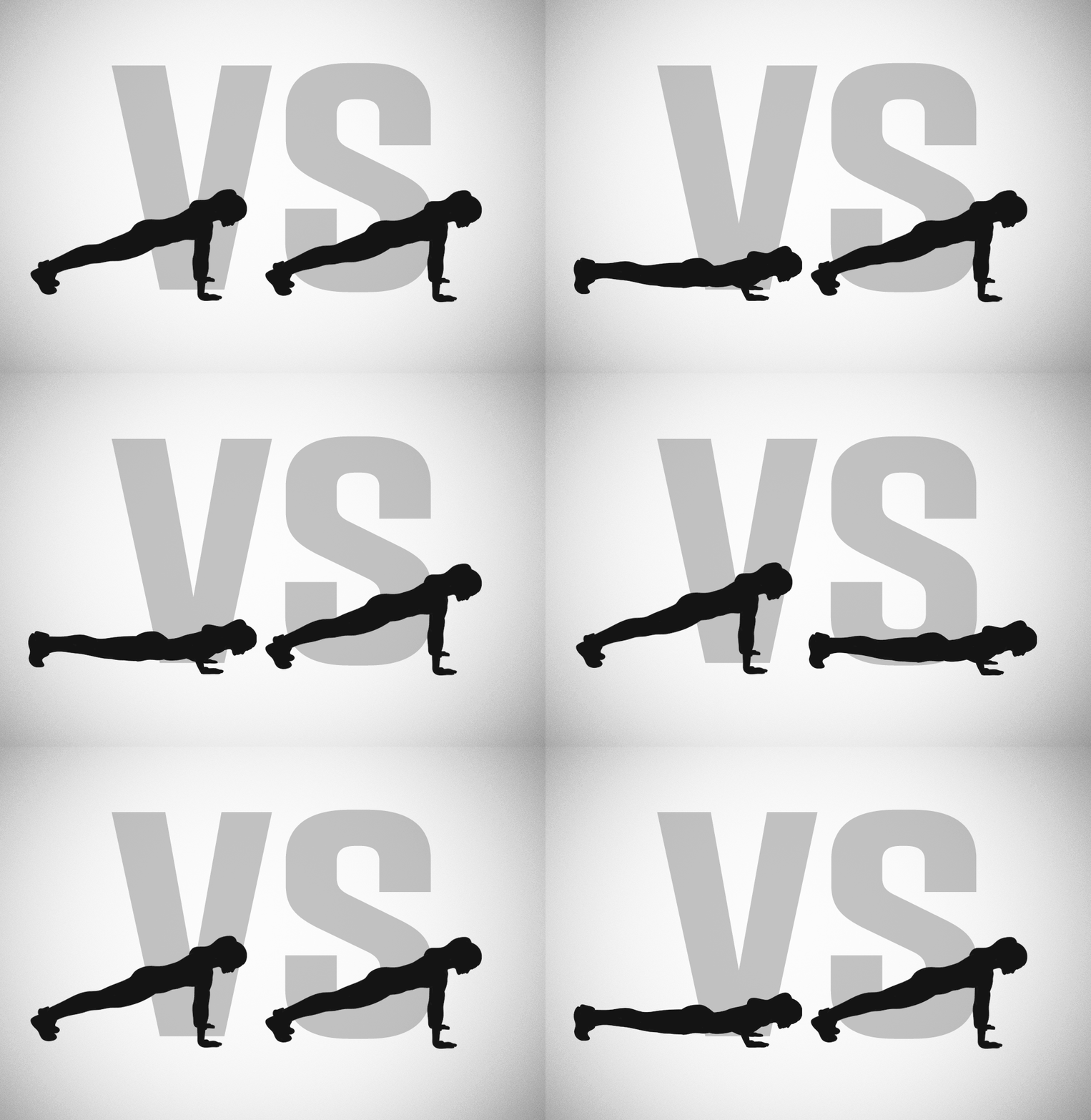
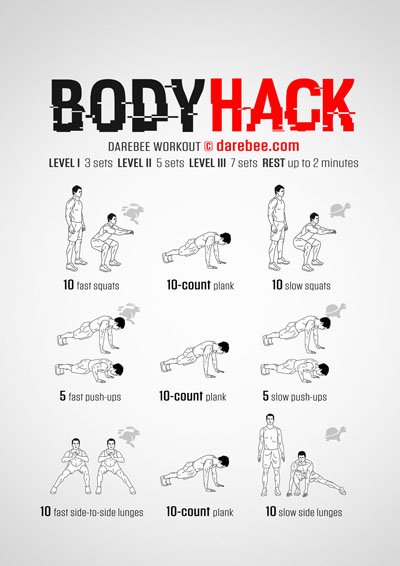
We want this time to do the maximum number of push-ups we can do in, say thirty seconds. To do this we need to go as fast as possible and to achieve that we don’t go as deep in our push-up downward movement as before.
Is this now a resistance training, cardio or aerobic exercise? In all honesty it’s all three but the emphasis has changed and the adaptations we will experience will be different as a result.
By going as fast as possible we have, again, shifted up to sixty-four per cent of our body’s weight so that is the resistance component, but we made the execution faster by not going as deep in the downward part of the push-up, which means we have changed the angle of the muscles to the joints which determine the load those joints experience which they transmit back to the muscles so the strength training component of this exercise is now different. We experience a slightly lighter load in each push-up.
By executing the push-ups faster we have made it imperative that the heart pumps faster however to get more blood to the muscles quicker and take away carbon dioxide and other by-products of exercise. The speed of execution has also increased our need for oxygen. We are performing more reps in the same amount of time than before so although this is a cardio exercise now, it has a strong aerobic component because it is forcing the lungs to improve (if they’re not in a good state of fitness already) and absorb more oxygen from each breath to pass into the bloodstream which will then transport it to our muscles.
The adaptations that will take place now, as before will be strength (making our muscles stronger) and cardio (making our heart stronger) related but they now have a stronger aerobic component (making our lungs stronger) with capillaries need to be increased in the lungs so we can make better use of the oxygen we take in from each breath.
Again, the exact same principle applies if we execute squats instead of push-ups. From a strength training point of view we are now building up the muscles in a different body part but if we change the execution to failure or go really fast we add a cardio and an aerobic component.
Every time we do push-ups or squats all three: strength, cardio and aerobic fitness are in play but each one to a different degree and the body will develop the most the fitness component we put most focus on through our execution of the exercise.
Summary
Every exercise we perform has a resistance (strength), cardio (heart and blood veins fitness) and aerobic (lung efficiency) component to it. The component we improve the most however will be determined by how we choose to execute the exercise, not what kind of exercise we choose to do.
Suggested Workouts
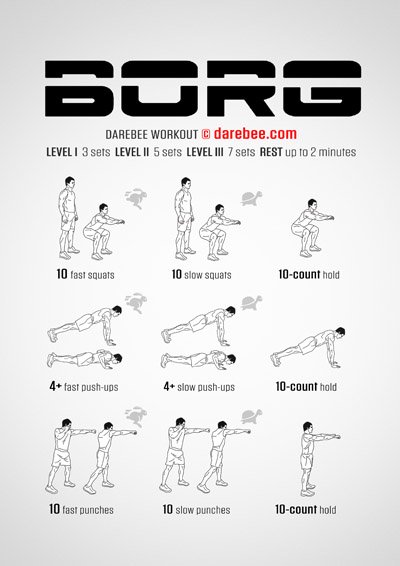
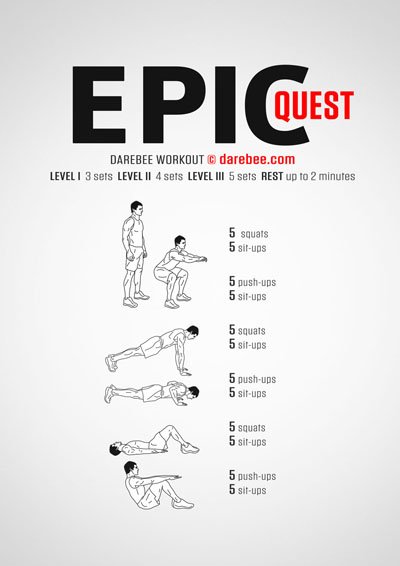
Research
- 1. Phillips SM, Winett RA. Uncomplicated resistance training and health-related outcomes: evidence for a public health mandate. Curr Sports Med Rep. 2010 Jul-Aug;9(4):208-13. doi: 10.1249/JSR.0b013e3181e7da73. PMID: 20622538.
- 2. Cheng JC, Chiu CY, Su TJ. Training and Evaluation of Human Cardiorespiratory Endurance Based on a Fuzzy Algorithm. Int J Environ Res Public Health. 2019 Jul 5;16(13):2390. doi: 10.3390/ijerph16132390. PMID: 31284468; PMCID: PMC6651740.
- 3. Patel H, Alkhawam H, Madanieh R, Shah N, Kosmas CE, Vittorio TJ. Aerobic vs anaerobic exercise training effects on the cardiovascular system. World J Cardiol. 2017 Feb 26;9(2):134-138. doi: 10.4330/wjc.v9.i2.134. PMID: 28289526; PMCID: PMC5329739.
- 4. Adams MM, Hatch SA, Winsor EG, Parmelee C. Development of a Standard Push-up Scale for College-Aged Females. Int J Exerc Sci. 2022 Jun 1;15(4):820-833. PMID: 35992503; PMCID: PMC9362895.
- 5. van den Tillaar R, Ball N. Push-Ups are Able to Predict the Bench Press 1-RM and Constitute an Alternative for Measuring Maximum Upper Body Strength Based on Load-Velocity Relationships. J Hum Kinet. 2020 Jul 21;73:7-18. doi: 10.2478/hukin-2019-0133. PMID: 32774533; PMCID: PMC7386139.